Explore our curated selection of high-performance cosmetic raw materials, each engineered for precise active ingredient formulation and blending.
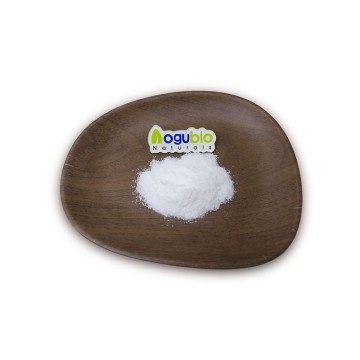
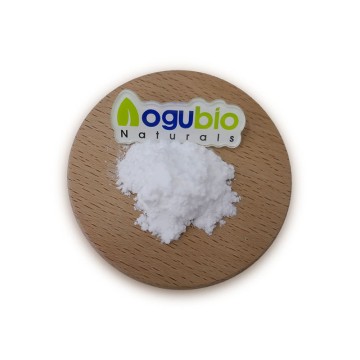
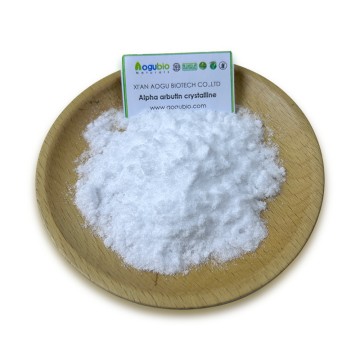
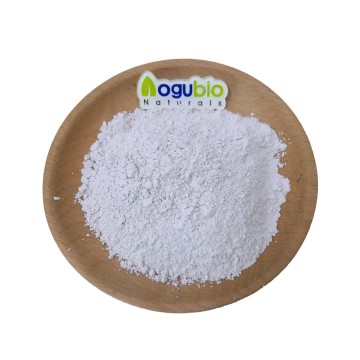
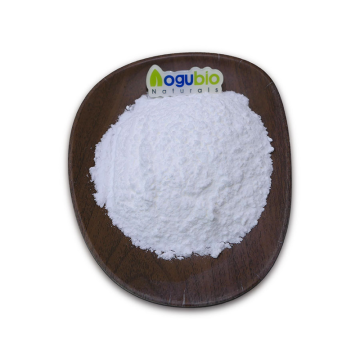
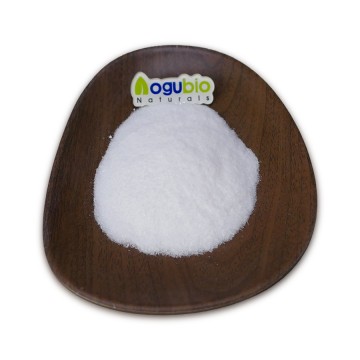
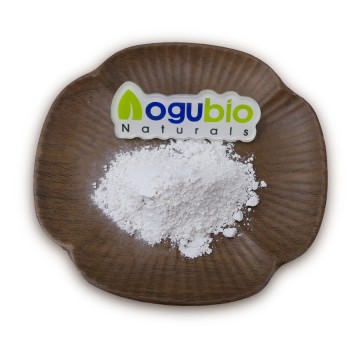
L-Ascorbic Acid Powder — widely recognized as pure Vitamin C in its most bioavailable crystalline form — stands as one of the most extensively researched and commercially significant active ingredients in modern cosmetic science. With a molecular formula of C₆H₈O₆ and a CAS number of 50-81-7, this white to off-white fine powder delivers unparalleled antioxidant potency, making it the cornerstone of advanced skincare formulations targeting brightening, anti-aging, and photoprotection.
In the context of cosmetic active ingredient formulation and blending, L-Ascorbic Acid Powder is prized for its direct, high-efficacy performance at the cellular level. When incorporated at optimal concentrations — typically ranging from 10% to 20% in serums and treatment products — it actively inhibits melanin synthesis by suppressing tyrosinase enzyme activity, neutralizes free radicals generated by UV exposure and environmental pollution, and stimulates collagen biosynthesis through the hydroxylation of proline and lysine residues.
Key Technical Insight: At pH levels below 3.5 and concentrations ≥ 10%, L-Ascorbic Acid demonstrates maximum dermal penetration and antioxidant efficacy — a critical parameter that cosmetic chemists must master during formulation and blending to unlock its full potential.
The global cosmetic industry's accelerating demand for evidence-based, clinically validated active ingredients has propelled L-Ascorbic Acid Powder to the forefront of formulation science. From luxury prestige skincare brands to indie clean beauty labels and contract manufacturing organizations (CMOs), the demand for pharmaceutical-grade, high-purity L-Ascorbic Acid suitable for professional cosmetic blending has never been stronger.
Six scientifically validated performance dimensions that make L-Ascorbic Acid Powder the preferred active ingredient for professional cosmetic formulators.
Inhibits tyrosinase to reduce melanin overproduction, visibly fading dark spots, hyperpigmentation, and uneven skin tone for a luminous complexion.
Neutralizes reactive oxygen species (ROS) from UV radiation and environmental pollutants, protecting skin cells from oxidative damage and premature aging.
Acts as an essential cofactor in collagen biosynthesis, promoting fibroblast activity to restore skin firmness, elasticity, and youthful structural integrity.
Synergizes with sunscreen actives to enhance UV protection efficacy, reducing erythema and photoaging damage when combined in broad-spectrum formulations.
Supports ceramide synthesis and skin barrier function, improving transepidermal water retention and overall skin moisture balance in complex formulations.
Regenerates oxidized Vitamin E back to its active form, creating a powerful synergistic antioxidant network when combined in multi-active formulations.
Successful integration of L-Ascorbic Acid Powder into cosmetic formulations demands a sophisticated understanding of physical chemistry, ingredient compatibility, and stability engineering. As a water-soluble, highly reactive molecule, pure L-Ascorbic Acid presents specific formulation challenges that distinguish expert cosmetic chemists from novice formulators.
The efficacy of L-Ascorbic Acid in cosmetic formulations is profoundly pH-dependent. Clinical research, most notably the landmark studies by Dr. Sheldon Pinnell at Duke University, established that maximum skin penetration and biological activity requires formulations maintained at pH 2.5–3.5. At higher pH values, the molecule becomes ionized and loses its ability to permeate the stratum corneum effectively. Formulators must carefully select acidic pH adjusters — such as citric acid, lactic acid, or ferulic acid — and employ robust buffering systems to maintain this optimal pH range throughout the product's shelf life.
The primary formulation challenge with L-Ascorbic Acid is its susceptibility to oxidation. Upon exposure to oxygen, light, heat, and metal ions (particularly copper and iron), ascorbic acid undergoes a two-step oxidation to dehydroascorbic acid and subsequently to 2,3-diketogulonic acid — an inactive, yellow-brown compound responsible for the characteristic discoloration seen in degraded Vitamin C formulations. Professional blending strategies to combat oxidation include: chelating agents such as EDTA or phytic acid to sequester pro-oxidant metal ions; antioxidant synergists including ferulic acid and Vitamin E (tocopherol); nitrogen-purging during manufacturing to minimize dissolved oxygen; and packaging innovations such as airless pumps, amber glass, and vacuum-sealed single-dose ampoules.
Advanced cosmetic formulation leverages L-Ascorbic Acid's synergistic interactions with complementary actives to amplify performance outcomes. The CE Ferulic formulation paradigm — combining 15% L-Ascorbic Acid, 1% Tocopherol, and 0.5% Ferulic Acid — has become an industry benchmark, demonstrating eight-fold enhanced photoprotection versus Vitamin C alone. Additional synergistic pairings include L-Ascorbic Acid with niacinamide for comprehensive brightening (though careful pH management is required to prevent niacin formation), hyaluronic acid for hydration-boosted delivery vehicles, retinol for comprehensive anti-aging formulations, and AHA/BHA exfoliants for enhanced penetration and cellular renewal.
Formulator's Pro Tip: For waterless or anhydrous formulations — such as oil serums, balms, and solid beauty sticks — L-Ascorbic Acid Powder can be incorporated as a suspended active, offering significantly enhanced stability while delivering a unique texture and sensory experience that resonates strongly with premium consumer segments.
The physical characteristics of L-Ascorbic Acid Powder — particularly particle size distribution and bulk density — directly impact its solubility rate, dispersion uniformity, and ultimately the sensory profile of finished formulations. Micronized grades (particle size D90 ≤ 50 μm) dissolve more rapidly in aqueous systems, reducing processing time and improving homogeneity in high-throughput manufacturing environments. Cosmetic manufacturers sourcing L-Ascorbic Acid for large-scale blending operations should specify particle size requirements alongside purity certificates to ensure consistent batch-to-batch performance.
L-Ascorbic Acid Powder serves diverse formulation applications across the full spectrum of cosmetic and personal care product categories.
| Product Category | Typical Concentration | Primary Function | Key Formulation Consideration |
|---|---|---|---|
| Brightening Vitamin C Serums | 10–20% | Tyrosinase inhibition, antioxidant defense | pH 2.5–3.5; airless packaging essential |
| Anti-Aging Day Creams | 5–15% | Collagen stimulation, photoprotection | Emulsion stability; SPF synergy |
| Sheet Masks & Ampoules | 5–10% | Rapid brightening, antioxidant boost | Single-use packaging for stability |
| Eye Contour Treatments | 3–8% | Dark circle reduction, firmness | Gentle pH; low irritation profile |
| Sunscreen Formulations | 5–10% | Enhanced UV protection, anti-oxidative | Compatibility with UV filters |
| Exfoliating Treatments | 5–12% | Brightening post-exfoliation | AHA/BHA compatibility at low pH |
| Hair Care (Scalp Treatments) | 1–5% | Antioxidant scalp protection | Rinse-off vs. leave-on considerations |
| Waterless / Solid Formats | 5–15% | Stability-enhanced active delivery | Anhydrous base; powder suspension |
The L-Ascorbic Acid cosmetic ingredient market is undergoing transformative growth driven by consumer science literacy, clean beauty demands, and manufacturing innovation.
The global cosmetic Vitamin C market exceeded USD 2.8 billion in 2024 and is projected to grow at a CAGR of 8.2% through 2030, fueled by rising consumer awareness of evidence-based skincare, the proliferation of dermatologist-recommended routines, and the premiumization trend in Asia-Pacific and North American markets.
Consumers increasingly demand transparency in ingredient sourcing and manufacturing. L-Ascorbic Acid's natural origin (traditionally derived from glucose fermentation), well-established safety profile, and extensive clinical backing make it a flagship ingredient for clean beauty brands seeking science-backed credibility without synthetic controversy.
Cutting-edge delivery technologies — including liposomal encapsulation, cyclodextrin complexation, microsphere embedding, and nanoparticle carriers — are revolutionizing L-Ascorbic Acid formulation by dramatically improving oxidative stability, extending shelf life, and enabling time-release delivery mechanisms that sustain efficacy throughout the day.
Contract manufacturers and private-label cosmetic brands are increasingly sourcing pharmaceutical-grade L-Ascorbic Acid directly from vertically integrated suppliers offering comprehensive technical support, custom particle size specifications, stability testing data, and regulatory documentation (COA, MSDS, REACH compliance) — shifting the competitive landscape toward value-added ingredient partnerships.
China has emerged as the world's dominant producer of high-purity L-Ascorbic Acid, accounting for over 80% of global production capacity. Advanced biotechnology fermentation processes and economies of scale have enabled Chinese manufacturers to supply cosmetic-grade Vitamin C at competitive pricing while progressively elevating quality standards to meet EU, US FDA, and Japanese regulatory requirements.
The industry trend toward sophisticated multi-active formulations — combining L-Ascorbic Acid with retinoids, peptides, niacinamide, and AHAs — is driving demand for deep formulation expertise and advanced stability testing capabilities. Brands that can successfully navigate these complex ingredient interactions gain significant competitive differentiation in an increasingly crowded market.
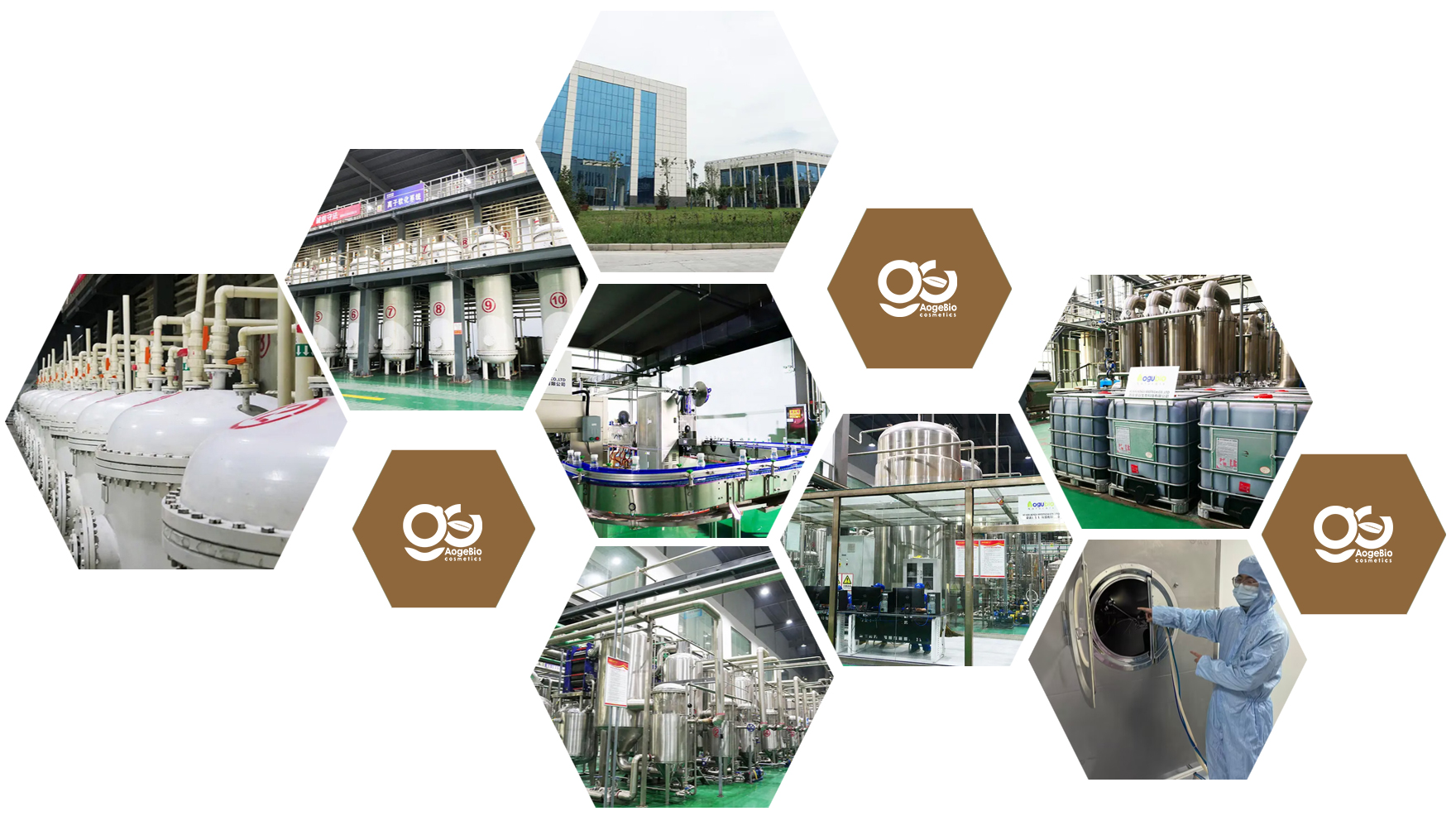
Founded in 2013 and headquartered in the prestigious high-tech zone of Xi'an, Xi'an Aoge Biotech Co., Ltd., along with its subsidiaries Xi'an Imaherb Biotech Co., Ltd. and Xi'an Nahanutri Biotech Co., Ltd., has established itself as a leading force in the cosmetics raw materials industry.
Our expansive cooperative factory, spanning 1,000 mu (approximately 165 acres), is equipped with state-of-the-art extraction technology. This advanced infrastructure allows us to manufacture a wide array of premium cosmetic raw materials. Our product line includes natural plant extracts specifically designed for organic cosmetics, as well as synthetic ingredients for high-end skincare formulations. These raw materials serve as the foundation for a multitude of skincare, haircare, and makeup products, ensuring superior quality and efficacy throughout the entire production process.
Our in-house laboratory is equipped with cutting-edge instruments for rigorous quality control. We utilize UPLC and HPLC for analyzing active components, GC and GC-MS for detecting solvent residues, ICP-MS for identifying heavy metals, and GC/LC-MS-MS for assessing pesticide residues. Additionally, we employ HPTLC and IR for identification purposes, ELISA for determining ORAC values, PSL for evaluating irradiation residues, and conduct comprehensive microbiology tests. These measures guarantee that our raw materials adhere to stringent international standards.
At Aogebio, innovation, quality, and sustainability are the bedrock of our corporate philosophy — reflected in every gram of L-Ascorbic Acid Powder we supply.
We pour relentless efforts into research and development, constantly exploring novel raw materials and advanced manufacturing techniques to stay ahead in the dynamic cosmetics industry. Our dedicated R&D team continuously optimizes L-Ascorbic Acid production processes to deliver superior purity, consistent particle size, and enhanced stability profiles tailored for modern cosmetic formulation needs.
Rigorous quality control is embedded in every step of our production process, from raw material sourcing to final product delivery, guaranteeing that each item adheres to the most stringent international standards. Every batch of L-Ascorbic Acid Powder is accompanied by comprehensive certificates of analysis, heavy metal testing, microbial testing, and stability data.
We actively embrace sustainable practices, striving to minimize our environmental footprint through eco-friendly production methods and responsible sourcing. Our L-Ascorbic Acid is produced via advanced fermentation biotechnology using renewable feedstocks, aligning with the clean beauty industry's growing demand for sustainably sourced cosmetic actives.
This unwavering dedication enables us not only to consistently offer products of unparalleled excellence but also to contribute to the long-term, healthy development of the entire cosmetics industry. As a trusted B2B partner, Aogebio provides comprehensive technical support, custom specifications, and flexible MOQ options for cosmetic formulators and manufacturers worldwide.
Discover our full portfolio of premium cosmetic raw materials — each formulated and blended to the highest standards for professional skincare manufacturing.
Whether you're scaling a prestige serum line, developing a new brightening formula, or sourcing bulk cosmetic actives for contract manufacturing — Aogebio delivers pharmaceutical-grade L-Ascorbic Acid Powder with full technical support, regulatory documentation, and flexible supply solutions.
Request a Sample & Quote →